
The band Ryszardy.
The musical level and the successes of this band's musicians could be nothing other than a match for the class of their master - based on solid craft in writing and performing - and such qualities were possessed by the promoter of that group, who effectively watched over its musical development. And he was no ordinary person: an excellent musician, the composer of many simply wonderful pieces and songs, whose musical and artistic mastery is best measured by their timelessness. I think internet users rightly guess that I mean the co-founder and leader of the band "Skaldowie" - Andrzej Zieliński.
Presenting them - I mention this in passing - became an important impulse which gave birth to the idea of writing, in as broad a view as possible, the history of the development of cultural and educational activity in Nowa Huta.
Continuing that subject, I turn to those vocal formations which are the aftermath of the group Margaretki.
So: the younger vocal group Debiuty, and the group called Andromeda, which was based on five secondary-school girls.
 |
 |
 |
 |
 |
 |
 |
 |
 |
 |

Further formations, also proving the absolute supremacy of the girls over the less fair sex, perhaps less talented, were "Erebat" and "Orzeszki".
 |
 |
The groups mentioned worked with great success under seasoned, because already proven, leadership: Kazimiera-Katarzyna Florek, Stanisława Piątkowska and Paweł Bieńkowski. These groups open a period in which a veritable avalanche follows of further artistic formations of various types, together with instrumental classes: lessons in playing the piano, accordion, violin, guitar and mandolin.
Listed below are the groups which still appeared at the turn of the 70s and 80s, and also selected hobby sections, for the sake of a formal record:
 |
 |
Unfortunately that record makes no mention of the charming duo called Biedroneczki. The duo consisted of the Doniec sisters, Roma and Jola, who by their singing won great affection from the audience. And since they sang with charm and talent, they soon found themselves among the staff of the ZDK.
After attempting to present to internet users the artistic activity at the ZDK (the Lenin Steelworks House of Culture), though not in full, one cannot omit what was happening in this field in the institutions subordinate to it, the so-called branches.
All the more so because, for example, at the "Ognisko Młodych" (Youth Club) such artistic forms were initiated as were not to be found at the ZDK itself.
Perhaps I will begin with those forms which cannot be given the status of exclusivity: the "Estrada Operowa", the "Estrada Piosenki", whose tone of quality was set by Larysa Wdzięczkowska with considerable musical support from Adam Pauliczek, and a jazz band made up of the following musicians, who already had a good reputation: Z.Irzeński, W.Robotycki, Z.Ząbek, Z.Balicki. A vocal quintet led by the excellent jazz musician Alojzy Thomys. I admit with regret that this group did not meet with a lively response from the wider public, even though vocally trained performers took part in it: Larysa Wdzięczkowska, Kazimiera-Katarzyna Florek, Leszek Lechowicz, Edward Zawiliński and Stanisław Florek.
At the same time Italian song reigned supreme ("easy, light and pleasant"). The quintet's programme, however, was kept in the jazz convention, which suited mainly jazz fans.
 |
And the effective support given to the quintet by the jazz band - mentioned a moment ago - was not able to change that fact. Yet for connoisseurs, listening to the sound of these two groups joined together was a true musical feast - this example had no equivalent and is the next of the announced exclusives. And here are further examples of this type: the "Koło Młodych Poetów" (Young Poets' Circle).
 |
 |
The young adepts of this extraordinarily difficult art of literary writing presented their first poetic attempts during evenings of poetry combined with jazz. The excellent poet Ewa Lipska, known "to one and all" today, then (in the fifties) the winner of the "Poetry Contest for Young People" (organiser - Głos Nowej Huty), appeared at the inaugural evening of poetry and jazz in the famous café "Violinka" - a fact I record not without a sense of honour and satisfaction. And the photograph above will bear it out.
Thanks to my assistance we managed to win Ewa Lipska for our circle. The poet Beata Szymańska also appeared as a guest that evening.
 |
The cabaret "Violinka", which presented its programme entitled "Siedem dni plotek i piosenki", has its own separate section on the website entitled "The first cabarets in Nowa Huta". Contests of various kinds also had their own, individual character: the vocal contests entitled "We Are Looking for New Talents", organised under the auspices of the Polish Radio station in Kraków and of Głos Nowej Huty.
Both popular and classical singers took part in them - from songs all the way to opera arias.
The "Contest for an epigram about Nowa Huta" - the jury chaired by Witold Zechenter, judging the harvest of the contest, chose the best epigrams, which were then presented at many events.
The authors sent in several dozen epigrams, but my unreliable memory has kept only one: "Nie jedna pała tu się zalała" - it refers to the Nowa Huta reservoir.
The recitation contest - the best participants went on to the "Młodzieżowa Estrada Poetycka", which worked at the ZDK. The "Contest for a song about Nowa Huta" - it was written in golden letters in the activity of the "Ognisko Młodych". It gained not only enormous publicity but also a nationwide reach and an exceptional response. The contest was held under the patronage of the Culture Department of the District National Council (DRN), which funded the prizes for the winners, and of Głos Nowej Huty as the promoting party.
Composers who were very well known at the time, with significant successes already to their credit, took part in the contest.
I know this because many composers demanded the return of their contest pieces. Over 150 songs were entered. The jury consisted of: Irena Garztecka, Alojzy Thomys, Andrzej Czopik, Jerzy Walawski, Adam Włodek, Jan Żabicki - a representative of the editorial office of Głos Nowej Huty. After all the songs had been heard, eight were admitted to the final. The organisers offered eight performers the choice of two items suited to them, so that each song would have two performed versions.
The songs, prepared by the vocalists together with a band, were presented at two public concerts. The first took place in the theatre hall of building "S". The second - in the steelworks' Sports and Entertainment Hall.
On entering the concert, each listener received a list of the song titles, from which - after hearing them - he could pick one that he considered the best. And here are the results of that vote:
- 1st place went to the song entitled "Uśmiechnij się" - lyrics Z.Biegański, music S.Florek,
- 2nd place - lyrics C.Wazyl - J.Olczyk, music A.Wazyl,
- 3rd place - lyrics T.Śliwiak music L.Rzewuski,
- 4th place - lyrics J.Walawski music S.Florek.
The remaining songs, or rather their authors, were also honoured with a distinction and a cash prize.
 |
 |
 |
 |
In this series of artistic forms, as distinguishing marks of a kind of the "Ognisko Młodych", one should mention the Hawaiian guitar group and also the ballroom dancing courses, levels I, II and III, run by A.Szwed.
Changes of the main animators of cultural and educational life in the ZDK's institutions sometimes fundamentally determined the priorities they set themselves in the work undertaken in new places and in a new role, which is also reflected in the example of S.Daniłoś.
After my move to the "Ognisko Dziecięce" (Children's Club) he took over the management of the "Ognisko Młodych". The new head naturally preferred educational forms, which largely set the directions of the institution's work.
The dominant feature was cycles of lectures: "Around the world", "We must be judges", "Technology helps man", "Wanderings among the stars", "Youth and its rights".
Listeners showed special interest in the cycle entitled "From nebula to man", which covered quite a wide range of subjects, such as geography, technology, law, astronautics, ethics, and also everyday upbringing.
Among the residents of the workers' hostels - but not only them - the hobby clubs were especially popular: the Theatre Lovers' Club, the Good Book Club, the Friends of Art Club, the Song Lovers' Club, and above all the Youth of the World Club. The last of these was run extremely dynamically and attractively - in terms of programme - by Włodek Lipczyński. I too took part in it willingly, because - apart from the chance to get to know the culture of other nations - an additional asset was the trips to various communities, as part of an exchange of experience with other clubs of this type.
Such clubs as the Film Discussion Club, the Photography Club and the Sports Fans' Club, already existing in earlier years, consistently carried on their programmes. The Amateur Film Club occupies my thoughts to an exceptional degree: the scope and rank of its activity and the scale of its achievements deserve a separate documentary study.
I only express the hope that in the near future someone competent in the field of film-making will not allow that phenomenon to dissolve in the expanses of oblivion because of passing time, which mercilessly blurs the sharpness of receding facts and events.
An extraordinarily important role was played by the library with its reading room - located at the Ognisko Młodych.
Of special importance were the effectiveness of its educational influence and the concern for the reach and impact of the library on the working-class community, but also, on a wide scale, on the population of Nowa Huta, including school pupils.
The head of this popularising institution - Helena Lipczyńska - strove hard for that. Her efforts to win the widest possible crowd of readers did not consist merely in giving them expert advice, but also in ensuring a wide offer in the form of meetings with writers, talks on literature and on cultural and educational matters, and also readers' contests.
Despite rooms that were limited - in terms of floor space - the library had 5 thousand volumes, and more than a thousand readers could be counted in its card index.
It is a fact that in the club's new programme educational activity came to reign supreme, which does not mean that artistic forms were abandoned altogether.
The guitar and accordion classes were still run. The work of the song stage was also kept. And even a guitar band was formed, "Wiślanie".
An important part of the cultural and educational work was the artistic events which were organised with unfailing regularity - on days off work - in the concert shell in the park, not far from the club.
At the Ognisko Młodych itself, dance and entertainment evenings were organised, which for the dancers were a kind of lesson in spending time in a cultured way and in the rules of savoir-vivre.
I have already made the reservation that this text - for many reasons - will not give the full range of cultural and educational activity, even in those institutions which are (for the writer of these words) an object of special interest.
Nevertheless, certain forms of activity and certain events cannot be light-heartedly omitted. One of the important forms of raising the level of culture was training the habit of listening to so-called serious music.
No wonder, then, that the Ognisko Młodych ensured wide cooperation with the Kraków Philharmonic, thanks to which - contrary to all sceptical opinions - concerts took place surprisingly often in the hostel club next to the Ognisko.
Also worthy of note is the Club of the Young Intelligentsia, which gathered in its ranks actors, visual artists, doctors, lawyers and journalists. Inhabitants of Nowa Huta, of course.
A phrase of a personal character is in every way welcome in music. Quite the opposite happens with a similar phrase forced into a structure of words. So I ask in advance to be forgiven my unruly confessions. My parting with the Ognisko Młodych was a painful drama. The café Violinka, whose most masterly decor - in terms of originality and artistic concept - had no parallel, not only created a wonderful atmosphere but had some magnetic quality that encouraged one to celebrate it often. That café setting was the work of an extraordinarily talented visual artist, Janusz Trzebiatowski. The name Violinka I took the liberty of choosing from among the many proposals sent in by respondents in a contest. The unique interior of the café is one thing, and the other: exceptionally interesting presentations of the most varied artistic programmes were served there, and meetings were organised with well-known artists, headed by jazz, greatly awaited and euphorically received by its fans. And yet this is only a fraction of the wide and oh so attractive programme that the regulars of the Ognisko Młodych had before them.
So let us move on, together with my move, to the Ognisko Dziecięce (Children's Club).
What mattered was that I could carry out my own programme while keeping the already existing forms of work, both artistic and educational. So I immediately set about constructing - as people like to say today - new, interdisciplinary projects. Not in order to dazzle anyone with - let us say - the originality of an idea, but out of the need of the situation and the demand of the moment. But enough digression! - let us get to the heart of the matter by referring to the achievements the Children's Club already had.
 |
The work of my predecessors, Kazimiera-Katarzyna Florek and then Walery Pisarek, was the creation of study rooms: for physics, chemistry, biology and mathematics. A puppet theatre, an art club, a eurhythmics group and a piano class were organised.
After the children's department was moved from the ZDK to a separate building and its management was taken over by Stanisław Daniłoś, the name "Ognisko Dziecięce" was adopted.
Those changes were followed by new artistic formations and hobby sections: a poetry stage, a song stage, the little theatre "Krasnal", a young technician's workshop, an aircraft and boat modelling workshop, and foreign language courses (English, German).
A library was also created, which at that time had over three hundred young readers
The club did have a limited number of rooms, and small ones at that, yet its activity was marked by an ever wider scope and by new successes.
 |
 |
The little theatre "Krasnal", run by Leokadia Daniłoś, received the prize of the Ministry of Culture and Art, and the art club directed by Ewa Januszkowska won first prize at the National Art Contest in Katowice.
 |
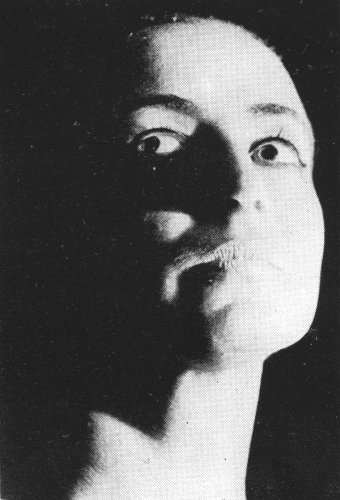
The poetry stage also prided itself on repeated success in the form of first places, both as a group and individually, at national reviews of poetry theatres, thanks to the Teatr Ludowy actor Tadeusz Kwinta and to Roman Marzec, who had earlier taken part in the poetry stage himself and later, having completed his acting studies, found himself on the stage of the Teatr Ludowy.
 |
It was a rather telling feature, and the right order of things, that many actors of the Teatr Ludowy were additionally employed in the ZDK's institutions, with a view to ensuring the development and proper artistic rank of the artistic formations working there. And it is worth stressing, as already mentioned, that young amateurs taking part in the ZDK's groups not infrequently became professional actors as a result. But to return to the children, who were developing not only artistically but also physically, for which reason the poetry stage was moved to the ZDK under the especially expert wing of someone already known to internet users from the earlier description of the ZDK's artistic activity and its presentation - Irena Jun.
Alongside the significant artistic movement, great impetus was also given to educational forms. Quite a few clubs were created: a readers' club, a stamp collectors' club, the friends of "Czarna Stopa", the friends of the children's stage.
Having taken over the whole inventory of the Children's Club with its surroundings, I set about - as has been said - carrying out what resulted from the need of the moment, and not only that.
 |
 |
 |
 |
It so unfortunately happened that - I also mentioned this when describing the history of the song stage group Margaretki - as a result of several girls leaving the group (to this day nobody knows for what reasons) it became necessary to organise a singing contest as a matter of urgency. Contrary to appearances that undertaking, very absorbing to organise, brought highly satisfying results: a large number of entries and - what was especially pleasing - a high level of contestants, and particularly the participation of boys. And the plan of the contest made possible not only a quick rebuilding of the group but its transformation into a song theatre with boys taking part as well. The conclusions after the contest showed the need to organise this event at least once a year.
That in turn even made it possible to form a choir, led with an able hand by a musician well known in Nowa Huta - Ludwik Czech. It is hard not to mention - since this is the achievement of our community - that to his credit were the creation and the significant successes of the group "Smarkule", though it worked at the Youth House of Culture.
In the seventies this group came to the ZDK under the changed name "Ad Libitum", and likewise - under changed leadership. When I mentioned that I took on the role of managing the Children's Club together with its surroundings, I had in mind the nearby courtyards around the institution, where the loud romping of shouting children sometimes noticeably disturbed the classes and events taking place in the club. No wonder, then, that in this situation an effective solution had to be found. By a strange chance I hit upon this idea: I decided to programme special events, meetings with interesting people and interesting film screenings, addressed exclusively to those children who completely shunned what the Children's Club had to offer.
The plan thus hatched was preceded by talks with the children of the courtyard, especially those who led the way in their groups. They were also invited to classes open to them. At every opportunity of contact with them I tried to stress that the programme devised for them was especially attractive and meant exclusively for the club of the "Podwórzanie". That difficult undertaking not only - to put it colloquially - saved the day, but became a spectacular event and an object of special interest for the so-called authorities, both of culture at a higher level and of other bodies.
 |
As far as events are concerned, my special inclination was always contests of every kind. With the idea of trying to reach beyond the club's immediate influence and to arouse interest in the institution among other circles of children too, I devised a literary contest entitled "Heroes are among us". This contest was publicised mainly in the schools of Nowa Huta. It aroused unexpectedly great interest among pupils, which was of course reflected in the several dozen works sent in for the contest.
What astonished the organisers, and above all the jurors of this event, was not only the number of works entered but their substantive value. The contestants most often presented people worthy of the name of hero who were active in the Nowa Huta community or outside it. But some authors of the contest works (mainly girls entered) presented members of their own family as heroes. Among this group was the daughter of Ryszard Filipski, who won first prize. The winner's work was very mature for her age not only intellectually but also in style.
The works were judged by a committee consisting of: Maria Buttyter, the editor-in-chief of the newspaper "Głos Nowej Huty" - Roman Wolski - and my humble self. The contest was held under the patronage of the editorial office of "Głos Nowej Huty".
 |
The eurhythmics group mentioned earlier had a telling feature of substance, which is why I have allowed myself to return to this form. In the amateur movement eurhythmics is understood as a set of exercises that perfect the coordination of movements and shape a graceful figure and distinction of gesture. Properly run eurhythmics classes are excellent preparation for ballet. But eurhythmics as understood, for example, by a music school has a much wider range of skills, consisting in learning the values of notes.
And this clearly enriches the range of exercises and leads easily into performing various rhythmic structures, that is, it equips the children with musical knowledge as well. Eurhythmics at the Children's Club was run in this convention. Children prepared in this way went not only to the ballet but also to the Teatrzyk Piosenki. These groups were led by K.K.Florek, and the musical accompaniment was provided, with her musical talent, by Stanisława Piątkowska.
The Children's Club, despite very inconvenient premises, carried on very wide artistic activity through its various groups, which equipped their members with vocal, musical, dance, acting and recitation skills, awakening a love of art.
The clubs, study rooms and hobby sections, in turn, stimulated particular passions of their members and sometimes set the direction of their further education, and perhaps in the future of their choice of profession.
In addition, the club organised a whole series of various talks, meetings with interesting people, film screenings, and also artistic events with its own and invited groups.
Moving on to describe the standard programme work in the workers' hostels, that is, the Young Worker's House (DMR) - it was in this building that the great cultural and educational campaign began, aimed at the culture-creating development of the Nowa Huta community, and especially of that part of the incoming population which was housed, among other places, in the DMR. Here, in the clubs that were formed, with such names as "Antynuda", "Szkrab", a programme of events was carried out which consisted of talks of various kinds and meetings with well-known representatives of culture and art, the press, writers, popular actors and globetrotters, who illustrated their travels with slides or film screenings.
In the Young Worker's House, which consisted of several blocks, there were common rooms next to the club; they served as quiet places for study (its residents were gaining qualifications at various technical schools and colleges) and also as reading rooms. The House also had a theatre hall, where one-actor shows and artistic events were organised, educational films were screened and the winners of contests were presented: poetry, music, singing and ballroom dancing contests.
As has been said: the residents of this hostel were continuing their education - and there were about 3000 of them - and they also had access to a library richly stocked with books.
There were no suitable conditions here for running numerous groups, yet several existed: a music and entertainment group, an accordion group and a recitation group. In addition, a Correspondents' Circle worked here, and an English course and a ballroom dancing course were run. The trips under the name "We visit the monuments of Kraków" were very popular with the hostel residents.
It remains to add what resulted from the source material - ".. responsible for the events and programme were, in turn: Stanisław Florek, Franciszek Daniel, Kazimierz Moskwa..".
Having covered the activity of the individual institutions that were integral parts of the ZDK, I return to the educational section, which is also an inseparable part of it.
The dominant feature of educational activity at the ZDK was talks and lectures in psychology and pedagogy, also taking in technical knowledge. In connection, for example, with the 1000th anniversary of the Polish state, lectures on archaeology and history were held.
An advice centre on furnishing home interiors was also organised. The vision of a tasteful, quasi-aesthetic furnishing of flats was, for the incoming population from rural backgrounds - in urban conditions - an important visual lesson. Of exceptional importance in the educational campaign run by the ZDK were such lectures as: "An introduction to the knowledge of art", "On the development of the species" - this subject was discussed in 62 lectures combined with films, attended by about 1200 listeners.
With each cultural and educational season the following forms were run in turn: an evening school of aesthetics, a theatre lovers' club, a space club, a radio and television club.
New cycles of meetings with lecturers concerned, in turn, such subjects as: "The accused", "We ask for the floor" and "Decades of culture of the neighbouring countries".


2003 - 2026 Kraków